
Holiday pet safety mostly comes down to planning ahead. I have spent more than 30 years caring for pets, and today Erick and I run Top Dog Pet Sitters in McKinney with our team. I can tell you the plan matters more than any single tip. Find your nearest 24-hour emergency vet, save two poison phone numbers, and handle the real hazards early: the table, the tree and a few plants. This covers Thanksgiving through New Year’s for dogs, cats and small pets, and it leans toward cats because of the tree and the lily warning.
Know Where Your Nearest 24-Hour Emergency Vet Is
Find the nearest 24-hour emergency vet before the holiday, drive the route once, and post the address and number where everyone in your house can see them. The one I send our clients to is VEG ER for Pets in Allen. It’s open 24/7, holidays included.
You don’t want to be hunting for directions while your pet is sick and you are panicking. Save these two lines in your phone too (screenshot them if you like):
- ASPCA Animal Poison Control: 888-426-4435, open 24/7 (a consultation fee may apply)
- Pet Poison Helpline: 855-764-7661, open 24/7 (a fee applies)
The two poison lines are phone triage. If your pet is showing signs, call your vet or the emergency clinic as well. Heading to VEG because your pet got into something toxic? Call one of the poison lines on the way and get a case number. VEG will want it when you get there.
Poison phone lines (screenshot this)
These are phone triage. If your pet shows signs, call your vet or the emergency clinic too.
Thanksgiving Pet Safety
Skip the people food at Thanksgiving, no matter how much your dog or cat whines or begs. I know the face. Hold the line anyway.
Here is what can land a pet at the emergency vet:
- Bones: they can cause choking or a blockage in the gut.
- Turkey skin, fat and gravy: all of it is too rich, and it can trigger pancreatitis, which can be life-threatening.
- Onions, garlic and chives: they can damage red blood cells, and cats may be more susceptible.
- Grapes, raisins and currants: stuffing and desserts can hide them, and they can cause kidney failure in dogs. No safe amount is known.
- Raw yeast dough: it can swell in the stomach and cause painful bloat that can twist.
- Alcohol: a drink left on a table, or a dessert made with it, can poison a pet quickly.
Holiday baking brings two more. Xylitol turns up in sugar-free baking, gum and some nut butters, and it is dangerous for dogs. Low blood sugar can start within minutes to about an hour, and liver failure is possible, so call your vet right away. Chocolate is the other: all of it is off limits, and baking chocolate and cocoa are the worst.
Bones, the carcass, strings and packaging belong in a closed, covered container your pet cannot open.
Tell your guests not to slip treats under the table, even the ones who swear a little bite will not hurt.
Christmas Tree Safety for Cats
Anchor the tree, skip the tinsel and cover the tree water, and your cat has far less to get into.
Cats climb, and they bat at anything that dangles. A Christmas tree is a tall climbing post covered in dangly things.
Anchor it. Tie the tree to the ceiling, a doorframe or a wall so it cannot tip if your cat climbs it. Fishing line works well for this.
Cover the water. Standing tree water can grow bacteria and cause nausea, diarrhea or an upset stomach, according to the ASPCA. Cover or block it, and do not add anything to the water if you have pets.
Skip the tinsel and long ribbon. Swallowed tinsel or ribbon can block or cut the intestine and often means surgery. Watch for vomiting, not eating, low energy or hiding, and call your vet if you see any of them. Honestly, tinsel is the one decoration I would leave in the box if you have a cat.
If string or tinsel is hanging from your cat’s mouth, call your vet or an emergency vet right away.
Mind the ornaments. Breakable ones can cut, and swallowed ones can block the gut. Hang the fragile ones high, and put cloth, wood or straw ornaments at cat level, where a swat does less harm. Salt-dough ornaments can be dangerous even when they are dry, so keep those out of reach entirely.
Watch needles and sap. Live-tree needles can irritate the mouth and stomach and, in large amounts, block the gut, according to Pet Poison Helpline. An artificial tree avoids the sap, the water and the needles, though it is still not for eating. If sap gets on your cat’s fur, wash it off so the cat does not lick it.
Give the climbing a home. A tall cat tree of its own gives a climber somewhere better to go than your Christmas tree.
Tree checklist for cat homes
1. Anchor
Tie the tree to the ceiling, a doorframe or a wall.
2. Cover the water
Cover or block it, and add nothing to it.
3. Skip tinsel
Leave out long ribbon too.
If your cat swallowed tinsel or ribbon and is vomiting, not eating, low on energy or hiding, call your vet.
Holiday Plants for Pets: Which Ones to Worry About
A few holiday plants can make a pet sick, and a true lily is the one that can turn into an emergency for a cat.
Warning: lilies and cats
Treat any lily your cat may have chewed as an emergency. Do not wait for symptoms. Call your vet or a poison line right away.
Is Poinsettia Toxic to Cats and Dogs?
Poinsettia is mildly toxic to cats and dogs: the sap is an irritant, and a nibble usually means mild drooling or vomiting, sometimes diarrhea. The sap can also irritate skin. It is not the deadly plant the myth says it is, but keep it out of reach anyway. If the vomiting or drooling is severe or won’t stop, call your vet or a poison line.
The Plants That Worry Me More
Lily (cats). This is the real holiday plant emergency. Even a small amount of leaf, petal or pollen from a true lily (Asiatic, stargazer, tiger or Easter) can cause sudden kidney failure in cats. Day lilies are a different plant, but they are on the same danger list for cats. Check every bouquet a guest brings. The ASPCA lists lilies as non-toxic to dogs, so lilies are mainly a cat emergency. If your cat may have chewed a lily, do not wait for symptoms: call your vet or a poison line.
Mistletoe and holly. Both can cause vomiting and diarrhea, and mistletoe in large amounts can affect the heart. Hang them well out of reach.
Amaryllis. It can cause vomiting, drooling and diarrhea, and the bulb is the most toxic part.
Decorations, Candles and Scents
Most decoration trouble comes from chewed cords, open flames and liquid scents.
Unplug your holiday lights and other decorations when you leave the house. A chewed cord can burn the mouth or shock, and chewed bulbs can cut.
Never leave a pet alone with a burning candle, because tails and paws knock them over.
Liquid potpourri and some diffuser liquids can cause chemical burns, especially in cats, so keep them out of reach.
Guests, Noise and New Year’s Eve
Give every pet a quiet room or crate away from the commotion, somewhere your guests will not follow.
Watch the door. A frightened pet can bolt, so make sure the collar tag and microchip carry current contact information.
Medications. Guests should keep theirs up and out of reach, in a closed cabinet and not in a bag on the floor.
New Year’s Eve. Fireworks and loud parties can frighten pets. Use an interior room, close the curtains, leave the lights and music or TV on to cover the noise, and pick up firework debris afterward. Do not take a pet to fireworks.
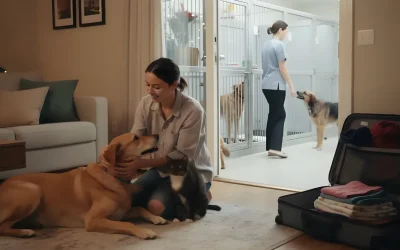
Away for the Holidays?
If you are taking your pet along, restrain them in the car: a crash-tested harness that connects to the seat belt for dogs, and a secured carrier for cats and small dogs. Secure the carrier so it cannot slide, keep both away from airbags, and never let a pet ride in the bed of a truck.
Pack a photo of your pet and your identification information in case your pet gets lost. Many states require a health certificate and the rules differ, so check your destination with your vet. If you are flying, talk to your vet first, especially for a short-nosed dog or cat.
If you would rather your pets stay home, contact us as early as you can about holiday care. Our holiday dates always fill up. Extended pet sitting is what we do for families in McKinney, Melissa and Celina who are traveling, and I’d be glad to talk through your plans with you. We have been voted Best in McKinney and Melissa, and we are a team with fantastic backup sitters.
If it is a cat staying home while the family is out of town, we offer cat care while you are out of town for exactly that.
I hope the biggest question in your house this season is who gets the last slice of pie, with your pet asleep on the couch through all of it.

Susan Gary owns Top Dog Pet Sitters in McKinney, Melissa, and Celina, TX, with her husband, Erick. She has been a professional pet care provider since 2015. Susan is a member of Pet Sitters International, is a founding member of the Texas Pet Sitters Association, and certified in pet CPR/First Aid. Susan is a long-time McKinney resident and a retired minister. Learn more about her here.