
When do the most lost dogs land in shelters? Right after the Fourth.
Shelter Animals Count, a national shelter database, found that from 2021 through 2023 July 5 was the single highest day of the year for stray dogs coming into shelters across the country, and in 2024 stray dog intake again peaked during the week of the Fourth.
After 30 years of caring for pets, I’d hate for yours to join that count. A good 4th of July pet safety plan is simple: every pet inside, a safe room, working ID and a registered microchip, party hazards out of reach, and a lost-pet plan ready before you need it. It works for cats, birds and rabbits too.
Before the Fourth: Check the ID Tag, Microchip and Gates
Get ID sorted first: a collar tag with a cell number you answer, plus a microchip.
Here’s my checklist:
- Call the company that holds your microchip number and confirm your phone number is current.
- Take a clear, current photo of each pet, just in case.
- Tell guests which doors and gates stay shut, and don’t count on a fenced yard. The American Humane Society warns that a frightened dog can clear or break through barriers it would never test on a normal day.
- Plan a longer walk earlier in the day, which can help take the edge off, and bathroom breaks before the noise starts.
Don’t skip the chip call. A 2009 Ohio State University study of 53 shelters in 23 states, using data from 2007 and 2008, found owners for about 73 percent of microchipped animals. The biggest reason owners couldn’t be found was a wrong or disconnected phone number in the registry.
Check that your microchip registry is still running, too. At least one national registry has closed (reported in 2025), and until a chip is re-registered, a scan doesn’t show the owner’s contact information.
If noise makes your pet panic, call your vet well ahead of the holiday, not the week of.
On the Fourth: Keep Pets Inside and Calm in a Safe Room
Bring every pet indoors, including the dogs that usually stay outside, and don’t tether any pet outside, even briefly.
A dog scared of fireworks may panic. The ASPCA says some pets go into fight-or-flight mode and can injure themselves trying to escape.
Set up a safe room. Pick an interior room with few or no windows, and put in their bed and water. Use a crate only if your dog already treats it as a safe spot.
How to calm a dog during fireworks starts with covering the sound and the flashing. Turn on the TV, a radio or white noise, and layer two sounds if one isn’t enough. Close the blinds and curtains.
Going to a fireworks show yourself? Have fun, but leave your pup at home. The ASPCA says it’s best to leave animals out of the celebration.
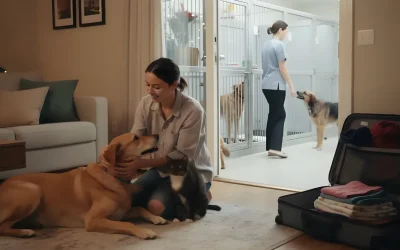
Don’t leave a frightened pet by themselves. Stay home with them, or have someone they trust stay. Cornell University College of Veterinary Medicine suggests a pet sitter they know and trust. If you’re traveling, extended pet sitting is one way to have someone looking after them.
Cookout and Party Hazards
Keep grill gear, party food, drinks and candles out of your pet’s reach, and never leave a pet in a parked car.
Unless I name another source, these hazards come from the ASPCA.
- Lighter fluid and tiki torch fuel. They can upset the stomach and irritate skin, and breathing them in can cause serious breathing trouble.
- Charcoal briquettes, skewers, corn cobs and bones. They can block the gut, and that often takes surgery to fix.
- Fatty drippings and scraps. Fatty foods can lead to pancreatitis, and even small amounts of drippings or greasy leftovers can cause vomiting and stomach pain in some pets.
- Toxic foods. Onions, chocolate, grapes, raisins and xylitol (a sugar-free sweetener) can be toxic, says Pet Poison Helpline.
- Alcohol. A pet that drinks it can become weak and badly depressed, or go into a coma.
- Glow sticks and glow jewelry. Not highly toxic, but they can cause drooling and an upset stomach, and swallowed plastic can block the intestine.
- Citronella candles, insect coils and tiki torch oil. Mosquitoes are annoying, but swallowing these can upset the stomach and possibly slow the nervous system, and breathing the oils in could cause pneumonia.
- Sunscreen and bug spray. Put them on a pet only if the label says it’s for animals.
- Fireworks themselves. Some contain chemicals that can be corrosive to the digestive tract. Pet Poison Helpline also warns of thermal injury when pets are near lit fireworks.
- Heat. Humane World for Animals (formerly the Humane Society of the United States) says that on a 72-degree day, a closed car can reach 116 degrees in under an hour.
If your pet eats something questionable
Call your vet or the ASPCA Animal Poison Control Center at (888) 426-4435. A consultation fee may apply for the ASPCA line.
Cats, Birds, Rabbits and Other Pets
Noise fear is less common in cats, but it happens, and cats, birds and rabbits all do best in a quiet room indoors.
Cats tend to hide, so check in on them and keep quiet music on. They can also slip out an open door. Even indoor-only pets can break through a window or door screen in a panic, according to Humane World for Animals, so they still need ID and a microchip.
Many bird owners keep the cage in a quiet interior room with soft background sound. Barbecue smoke can irritate a bird’s respiratory system, so keep the cage away from it.
Rabbits want windows and doors closed, soft music at low volume, a cardboard hide box and a cool room, because they’re prone to heat stroke, says the House Rabbit Society.
Have a small pet or a reptile? Ask an exotic-animal vet.
The Day After: Walk the Yard First
Walk your yard and patio before the pets go out. The ASPCA says fireworks that contain barium are most dangerous after they’ve been used, so pick up every remnant.
Clear every skewer, food scrap, full trash bag and cup. Close the bins too, since trash and compost can hold mold that causes tremors, according to Pet Poison Helpline.
If a pet is missing, keep checking in for a few days, not just one night. In Shelter Animals Count data from 2025, a day in the week after the holiday ranked second for stray dogs.
If Your Pet Runs Off: Search Steps and Collin County Animal Services
If your pet runs off, search close to home first, then call Collin County Animal Services, which shelters strays from McKinney, Melissa and Celina.
- Search close first. Call your pet’s name calmly. A frightened pet may be hiding nearby.
- Call Collin County Animal Services. File a lost report, then go in person, since online intake isn’t always current. The county’s lost-and-found page has the report form.
- Move fast. The county’s stray hold is short, so don’t wait.
- Find your paper rabies certificate. The county requires one from a licensed vet to reclaim a pet, and a metal rabies tag isn’t accepted. My advice: keep it where you can find it.
- Post clear photos on neighborhood apps, and put a worn shirt or bedding near home.
- Call your microchip registry to confirm your phone number. If there’s no tag, ask a shelter or vet to scan for a chip.
The clock at Collin County Animal Services
- The stray hold is 72 hours (shortened from five days in May 2026). Check in the first day or two.
- The hold applies to animals over five months old, so call right away if your pet is younger.
- Call first: the shelter is closed to visitors on Mondays, and holiday hours differ.
- Call to confirm the current hold, since an unclaimed animal can be adopted, sent to a rescue or otherwise placed after it ends.
Quick Answers About Comforting a Scared Dog
Should I cuddle my dog during fireworks?
Advice varies on how much to comfort a scared dog. Texas A&M College of Veterinary Medicine says a big fuss can add to a dog’s worry, while the American Humane Society says a calm presence is reassuring. Either way, act normal and don’t scold or punish, because Cornell says punishment only adds to the distress.
Can I give my dog something to calm down, like a sedative or an over-the-counter pill?
Ask your vet, and don’t give any medication unless your vet tells you to. Pet Poison Helpline warns that a human anti-anxiety medication taken by a pet can cause serious problems.
Your pet is counting on you to keep them safe. If you’re in McKinney, Melissa or Celina and want to talk through holiday plans, call us at Top Dog Pet Sitters, (214) 244-1629.

Susan Gary owns Top Dog Pet Sitters in McKinney, Melissa, and Celina, TX, with her husband, Erick. She has been a professional pet care provider since 2015. Susan is a member of Pet Sitters International, is a founding member of the Texas Pet Sitters Association, and certified in pet CPR/First Aid. Susan is a long-time McKinney resident and a retired minister. Learn more about her here.