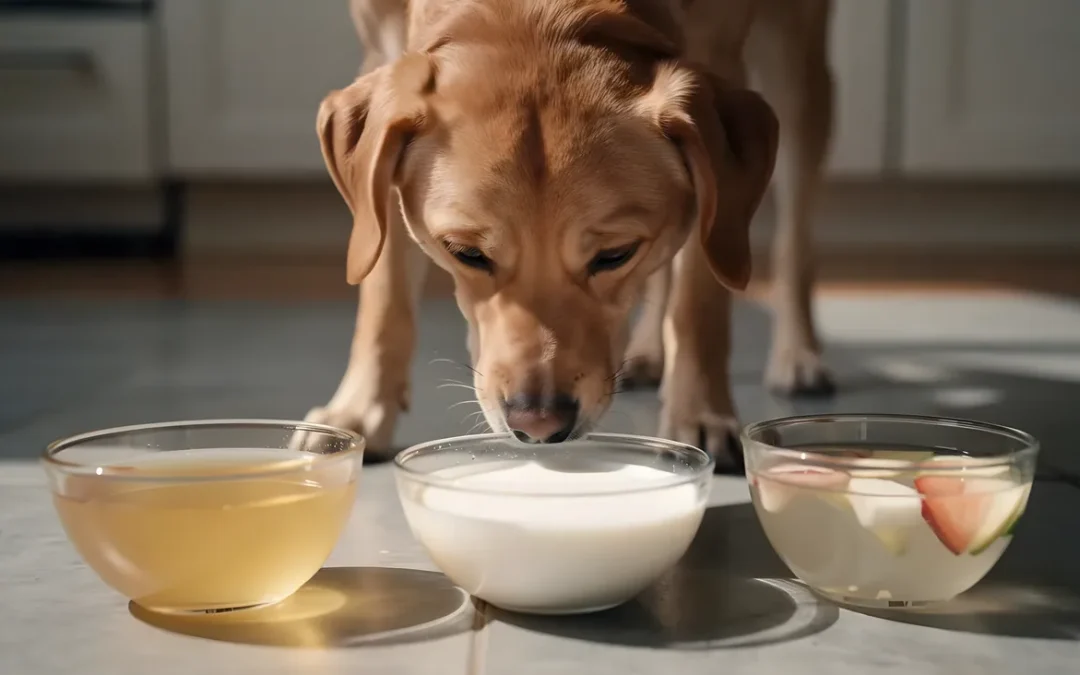
Every morning, we clean our pups’ water bowls and refill them with cool water. Every morning. Do dogs get tired of drinking just water? Is water boring? After all, humans drink a variety of liquids… iced tea, coffee, beer, wine, sodas, milkshakes, more wine…
First, are dogs bored with only drinking water? Who knows? We do know that:
- Most animals, including wild canines, rely entirely on water unless they are nursing.
- Water should be the main source of hydration for dogs. Dogs rely on drinking water to support the proper function of their organs, to carry nutrients from cell to cell, to support cognitive function, and more.
- Dogs need to drink one ounce of water per pound of body weight each day to maintain adequate hydration.
That said, there are some drinks that are perfectly safe to offer as an occasional treat or supplement. And there are a few that can seriously hurt your dog. Here’s what I tell pet parents when they ask.
First, How Much Water Does Your Dog Actually Need?
One ounce per pound per day is the baseline. A 40-pound dog needs roughly 40 ounces (about five cups) of plain water daily under normal conditions. That number shifts depending on diet and climate.
Diet matters more than most pet parents realize. Dry kibble contains only about 10% moisture, so a dog eating kibble gets almost no water from their meals and the water bowl has to do all the work. Wet food runs 70-80% moisture, which means a dog on wet food starts each day with a meaningful head start on hydration. Switch your dog from wet to dry food and their daily water requirement increases substantially.
And then there’s the Texas factor.
McKinney, Melissa, and Celina regularly see July and August highs above 95 to 100 degrees. Dogs do not sweat. They cool themselves by panting, and panting pushes moisture out with every breath. As air temperature approaches a dog’s normal body temperature of around 101 degrees, panting becomes dramatically less effective at releasing heat. A dog that normally needs 30 ounces a day may need considerably more on a July afternoon in North Texas.
Activity level matters too. A dog that just chased you around the backyard for 30 minutes needs significantly more water than one who spent the afternoon sleeping in the air conditioning.
When I’m sitting for a dog during a McKinney summer and they’re not drinking enough, I start refilling that bowl more than once. I watch for panting at rest, a dry nose, or low energy. Those are early signs that water intake is not keeping up with the heat.
Safe Drinks for Dogs (Besides Water)
1. Bone Broth (Low-Sodium, Dog-Formulated Only)
Safe Drink Serving Sizes at a Glance
Bone Broth
1 oz per 10 lbs body weight, up to twice daily. Dog-formulated only (no onion, garlic, or high sodium).
Coconut Water
1–2 tsp for small dogs, up to 4 tbsp for large dogs, once weekly. Check for xylitol on the label.
Goat’s Milk
1–2 tsp for small dogs, up to 1/4 cup for large dogs. Plain, pasteurized, a few times per week.
Kefir
1 tsp for small dogs, 1–2 tbsp for medium/large dogs. Plain and unsweetened. Goat milk kefir is gentlest.
Fruit/Vegetable Juice
A few tablespoons, 2–3 times per week. Fresh-pressed only, diluted 50/50 with water. No store-bought.
Herbal Tea (Caffeine-Free)
A few tablespoons for small dogs, up to 1/4 cup for large dogs. Brewed weak, cooled completely.
None of these replace water. They supplement it. Keep the water bowl full.
Bone broth provides collagen, glucosamine, and glycine that support joint health and gut function in dogs. It’s also my first recommendation when a picky drinker refuses plain water. Something in the scent gets even the most stubborn pups interested.
Serving guidance: about 1 oz per 10 lbs of body weight, up to twice daily. If you’re starting for the first time, begin at about 1/8 cup per 20 lbs and see how your dog’s stomach responds.
Here’s the important part: NEVER use regular store-bought human bone broth. Most grocery store broths contain onion, garlic, or sodium levels between 300 and 700 mg per 100 mL. Onion and garlic are toxic to dogs at any dose. High sodium stresses the kidneys. Look for broth specifically formulated for dogs, or make your own at home using plain bones, carrots, and celery with no added seasoning.
One more note: dogs with kidney disease or urate stones (common in Dalmatians and Bulldogs) should check with their vet before adding bone broth regularly.
2. Unsweetened Coconut Water
Coconut water delivers natural electrolytes (potassium and magnesium) that support muscle function and hydration recovery after exercise or heat exposure. It is a reasonable occasional supplement, not an everyday drink.
Serving by size: 1-2 teaspoons for small dogs, up to 4 tablespoons for larger dogs, once weekly at most.
Two things to watch: dogs with kidney disease should avoid coconut water because of its high potassium load, which healthy kidneys handle easily but compromised kidneys cannot. And read every label before buying. Some brands add xylitol, an artificial sweetener that is acutely toxic to dogs. More on that below.
3. Goat’s Milk
Goat’s milk is better tolerated by most dogs than cow’s milk because its fat globules are smaller, its lactose content is slightly lower, and it digests faster. Most adult dogs stop producing enough lactase enzyme to break down cow’s milk properly, which is why cow’s milk almost always causes GI upset. Goat’s milk sits easier on a dog’s digestive system.
Start small: 1-2 teaspoons for small dogs, up to 1/4 cup for large dogs, a few times per week. Plain and pasteurized only. Skip any flavored varieties.
4. Kefir
Kefir is a fermented drink made from cow, goat, or coconut milk and it is a powerful probiotic. The fermentation process breaks down most of the lactose, which makes kefir significantly more digestible than plain milk. Goat milk kefir is the gentlest option for dogs with sensitive stomachs.
Start with 1 teaspoon for small dogs, 1-2 tablespoons for medium and large dogs. Plain and unsweetened only. Check the ingredient list for xylitol before buying.
5. Unsweetened Nut Milk
Unsweetened cashew or almond milk contains beneficial vitamins, so a few sips can be a nutritious treat. Avoid any type of macadamia nut milk, as macadamia nuts are toxic to dogs.
“A few sips” is the right amount. This is a treat, not a hydration strategy. Always unsweetened, because some nut milks contain added sugars or artificial sweeteners that are unsafe for dogs.
6. Fruit and Vegetable Juice
If a fruit or vegetable is safe for a dog to eat, then the fresh-pressed juice from that fruit or vegetable is safe to drink in small amounts. Just make sure it is sugar-free and without added salt.
Safe options: carrot juice (rich in beta-carotene and vitamin A), cucumber juice (very hydrating, practical on hot days), watermelon juice (no seeds or rind), and fresh-pressed apple juice (no seeds, which contain small amounts of cyanogenic compounds).
Store-bought juice is almost always the wrong choice. Commercial juices contain added sugar, artificial sweeteners (including xylitol), preservatives, and concentrated flavorings that are not safe for dogs. Fresh-pressed or nothing. And whatever you use, dilute it at least half-and-half with water before giving it to your dog. Keep it to a few tablespoons, a couple of times per week at most.
7. Herbal Teas (Caffeine-Free Only)
Three safe options: chamomile tea (mild calming and gastrointestinal-soothing effect), ginger tea (anti-nausea, especially useful for dogs that get carsick), and peppermint tea (soothes upset stomachs).
Brew it weak. Cool it completely before serving. Small amounts only: a few tablespoons for small dogs, up to 1/4 cup for large dogs.
The ONE non-negotiable rule: CAFFEINE-FREE ONLY. Many herbal blends include green tea, white tea, or chai. Read every single ingredient on the label. Any caffeine in the blend makes the tea unsafe for dogs. I’ll say more about caffeine in the next section, because it matters a lot in a Texas summer.
8. Unflavored Electrolyte Drinks
Unflavored only, and ask your vet about the proper dosage before you start. An unflavored electrolyte solution can help with mild dehydration from a stomach bug or after heavy exertion in summer heat. If a vet approves it, the general guideline is roughly 2-4 mL per pound of body weight per hour, diluted 50/50 with water.
Unflavored is not optional. Fruit-flavored electrolyte solutions often contain xylitol. Always check the label.
Here’s the honest reality: if your dog is dehydrated enough that you’re reaching for an electrolyte drink, the smarter first call is the vet, not a trip to the store. Dog-specific electrolyte products are a better default than repurposing human products.
Drinks You Should NEVER Give Your Dog
This is where I put on my professional pet sitter hat. I have been doing this since 2015 and I have seen dogs get into things they shouldn’t. Some of these will make your dog sick. A few can kill them.
Never Give Your Dog These Drinks
Alcohol
Beer, wine, spirits, any amount. Causes vomiting, loss of coordination, CNS depression, and in serious cases, coma or death.
Caffeine
Coffee, black tea, green tea, matcha, energy drinks, chai. No safe dose. Raises core body temperature, a serious compounding risk in North Texas summers.
Grape Juice
Any grape-containing drink. Can cause acute kidney failure. No established safe dose. No exceptions for organic or diluted.
Xylitol-Sweetened Drinks
Found in flavored waters, diet sodas, sugar-free sports drinks, some nut milks. Triggers a severe blood sugar crash within 10–60 minutes and can cause liver damage.
Human Bone Broth
Almost always contains onion, garlic, or high sodium. Onion and garlic cause red blood cell damage that may not show symptoms for days.
Human Sports Drinks
Designed for humans who sweat. Dogs cool by panting. Standard sports drinks carry ~450 mg sodium per 12 oz, far too high for dogs.
If your dog got into something on this list: call the ASPCA Animal Poison Control Center at 888-426-4435 (24/7, fee applies) or your vet immediately.
ALCOHOL: Even small amounts of alcohol cause vomiting, loss of coordination, and central nervous system depression in dogs. In extreme cases, coma or death. Yes, beer counts. Yes, wine counts. Dogs metabolize alcohol far less efficiently than humans do. There is no safe quantity, not even a sip.
CAFFEINE (coffee, black tea, energy drinks, matcha): Caffeine blocks adenosine receptors in dogs, causing rapid heart rate, tremors, vomiting, and seizures. There is NO safe dose. This is not just about the coffee mug they lapped from when you weren’t looking. Caffeine also raises core body temperature, which compounds heat stress. That is a serious concern during a North Texas summer when temperatures already push a dog’s cooling system to its limit. This warning applies to black tea, green tea, chai, matcha, and any energy drink.
GRAPE JUICE: Grape juice and all grape-containing drinks can cause acute kidney failure in dogs. Researchers at Cornell University College of Veterinary Medicine confirmed the mechanism in 2022: tartaric acid is the culprit. The frightening part is there is no established safe dose, and individual dogs react very differently. Some dogs show no reaction to a grape; others go into acute kidney failure from a small amount. The default rule is zero grape products. No exceptions for organic, diluted, or “just a little.”
XYLITOL-SWEETENED DRINKS: Xylitol is an artificial sweetener found in some flavored waters, diet sodas, sports drinks, flavored electrolyte solutions, and some nut milks. Xylitol triggers a massive drop in blood glucose within 10-60 minutes of ingestion and can cause serious liver damage. A 30-pound dog drinking just a few tablespoons of a xylitol-sweetened drink can be in crisis. Read ingredient labels on anything marketed as “sugar-free,” “low-sugar,” or “keto-friendly.”
HUMAN BONE BROTH: I mentioned this above, but it is worth repeating. Most store-bought broth contains onion, garlic, or dangerously high sodium. These are not “a little bit is fine” ingredients. Onion and garlic cause a slow-building hemolytic anemia (destruction of red blood cells) that may not show symptoms for several days after ingestion. By the time you see signs of illness, significant damage may already be done.
HUMAN SPORTS DRINKS: Dogs cool by panting, not sweating. Human sports drinks are designed to replace the electrolytes lost through heavy sweating. A dog after a walk does not need that sodium load. Standard sports drinks contain about 450 mg of sodium per 12 oz, roughly three times what would be appropriate in a dog-formulated electrolyte drink.
If your dog got into something on this list, call the ASPCA Animal Poison Control Center at 888-426-4435 (open 24/7, a fee applies) or call your vet immediately. Do not wait to see if symptoms appear.
Signs Your Dog May Be Dehydrated
Before you know what to give a dehydrated dog, you need to know if your dog is actually dehydrated. Here’s a practical test you can do at home.
How to Do the Skin Turgor Test at Home
Gently pinch the skin between your dog’s shoulder blades and lift it, then let go. Here’s what the response tells you:
Springs back immediately
Well hydrated. No action needed.
Returns slowly (1–2 seconds)
Mild dehydration. Offer small amounts of water frequently and monitor closely.
Stays tented, does not return
Severe dehydration. Call your vet now. Do not wait.
In McKinney, Melissa, and Celina summers, dehydration progresses faster than in moderate climates. A 24-hour watch window elsewhere becomes a 12-hour window here.
The Skin Turgor Test: Gently pinch and lift the skin between your dog’s shoulder blades, then let go.
- In a well-hydrated dog, the skin springs back flat immediately.
- In a mildly dehydrated dog, the skin returns slowly, in about 1-2 seconds.
- In a severely dehydrated dog, the skin stays tented and does not spring back.
Beyond the skin test, watch for these signs organized from mild to serious:
Mild dehydration: dry or tacky gums, slightly less urine output than normal, low energy, dry nose, thick or ropy saliva.
Moderate to severe dehydration: sunken eyes, panting at rest, pale or white gums, rapid heart rate, weakness or stumbling.
When to call the vet: if the skin turgor test shows tenting, if your dog has pale or white gums, if they have not eaten or drunk anything in 12 hours, or if they have been vomiting or having diarrhea for more than 24 hours. Do not wait.
In McKinney, Melissa, and Celina, the July and August heat means dehydration progresses faster than it would in a moderate climate. What might be a safe 24-hour watch window elsewhere becomes a 12-hour window here. When in doubt, call.
How Often Can My Dog Have These Drinks?
3-4 times a week is a reasonable frequency, and the 10% calorie rule sets the ceiling. A dog’s daily treat intake should never make up more than 10% of their daily caloric intake, and this includes dog-safe beverages as well.
In practice, here’s how that math works: a 30-pound dog needs roughly 750-900 calories per day. Ten percent of that is 75-90 calories. That is the ceiling for ALL treats AND all non-water drinks combined for the entire day.
Here is a quick reference for how each drink fits into that framework:
- Bone broth: 2-3 times per week, about 1-2 oz per 10 lbs of body weight
- Coconut water: once weekly, small amounts (a few tablespoons for larger dogs)
- Goat’s milk and kefir: a few times per week, start small and build up gradually
- Herbal teas (caffeine-free only): occasional, a few tablespoons at a time
- Fruit or vegetable juice: a few times per week, always diluted 50/50 with water, tablespoon amounts
None of these replace water. They supplement it. The water bowl stays full.
Keeping Your Dog Hydrated This Texas Summer
McKinney, Melissa, and Celina summers are not gentle. Highs above 95 to 100 degrees are routine in July and August. And again: dogs cannot sweat. Panting is their only cooling mechanism, and panting efficiency drops sharply the closer air temperature gets to a dog’s body temperature of 101 degrees.
Summer Hydration Tips for North Texas Dogs
Time walks early or late
Before 8 AM or after 7 PM during peak summer. Midday walks in 100-degree heat push a dog’s cooling system past its limit.
Set up multiple water stations
One inside, one shaded outside. Dogs drink more when cool water is easy to access.
Offer frozen treats
Bone broth ice cubes, frozen watermelon chunks, cucumber-infused ice. Slower intake than bowl-gulping, and the cold temperature helps bring core temp down.
Wash the bowl daily
Bacteria multiply faster in standing warm water. Change water at least twice daily in summer. A dirty bowl can put a dog off drinking entirely.
Picky about plain water? Add a tablespoon of dog-formulated, unsalted bone broth to the bowl. Something in the scent overrides water refusal in most dogs.
Timing your walks matters. Before 8 AM or after 7 PM during peak summer. Midday is not the time.
Multiple water stations help too. One inside, one shaded outside. Dogs drink more when cool water is close by and easy to access.
Frozen treats are one of the most practical tools I use. Bone broth frozen into ice cube trays. Watermelon chunks frozen on a tray. Cucumber-infused ice cubes. These give dogs a slower, more controlled intake than gulping from a bowl, and the cold temperature helps bring their core temperature down at the same time. On a 100-degree afternoon in McKinney, that matters.
I had a client dog named Cooper, a big golden mix, who would flat-out refuse to drink plain water after a walk in the heat. He’d stand there panting, which is exactly what you don’t want when the air is already working against his cooling system. What worked: I’d add a tablespoon of unsalted bone broth to his bowl. He’d drink the whole thing. Something in the scent overrides whatever is going on with the water refusal. I now tell every pet parent of a picky summer drinker to keep a small supply of dog-formulated broth on hand.
One more summer hygiene note: bacteria multiply faster in standing warm water. In summer, change your dog’s water at least twice daily and wash the bowl with soap every day. A dirty bowl can be enough to put a dog off drinking entirely.
Frequently Asked Questions
What is a good substitute for water for dogs?
Bone broth is the closest thing to a universal answer. It is flavorful enough to get even picky drinkers interested, provides collagen and joint-supporting minerals, and mixes easily into their water bowl or food without fuss. Start with unsalted, dog-formulated broth and work up to 1-2 oz per 10 lbs of body weight. For dogs that need electrolyte support after exercise or in summer heat, diluted unsweetened coconut water is a reasonable occasional option. But nothing fully substitutes for plain water. These are supplements, not replacements.
Can dogs drink milk?
Not the cow’s milk from the refrigerator. Most adult dogs do not produce enough lactase enzyme to break down lactose in cow’s milk properly, and the results appear fast: loose stools, gas, or vomiting within a few hours. Goat’s milk and kefir are the dairy exceptions. Goat’s milk has smaller fat globules and lower lactose than cow’s milk, and kefir is fermented down to almost no lactose at all. A few tablespoons of either is fine; a full bowl of any dairy product is too much.
What can dogs drink if they are dehydrated?
Small, frequent amounts of plain water first. If a dog refuses plain water, a little unsalted broth mixed into the bowl sometimes breaks through the resistance. Unflavored electrolyte solution (dog-specific products work best) can help with mild dehydration, but only unflavored: fruit-flavored varieties often contain xylitol. If your dog is showing moderate signs of dehydration, including slow skin-turgor return, pale gums, or sunken eyes, call the vet. This is not a watch-and-wait situation in a Texas summer.
Can dogs drink apple juice?
Fresh-pressed, additive-free apple juice in small amounts is generally safe. The problem is that nearly every commercial apple juice at the grocery store contains added sugar, preservatives, or flavor concentrates that are not appropriate for dogs. If you want to give your dog apple juice, press it yourself and dilute it 50/50 with water. A few tablespoons is plenty. A bottle from the store shelf? Pass.
Looking for dog sitting in McKinney, Melissa, or Celina? Call 214-244-1629 or contact Top Dog Pet Sitters.
Susan Gary is the owner of Top Dog Pet Sitters in McKinney and Melissa, TX. She has provided professional in-home pet care since 2015, is a member of Pet Sitters International, a founding member of the Texas Pet Sitters Association, and is certified in pet CPR and First Aid.
Looking for pet sitting in McKinney, Melissa, or Celina? Call 214-244-1629 or visit the contact page.

Susan Gary owns Top Dog Pet Sitters in McKinney, Melissa, and Celina, TX, with her husband, Erick. She has been a professional pet care provider since 2015. Susan is a member of Pet Sitters International, is a founding member of the Texas Pet Sitters Association, and certified in pet CPR/First Aid. Susan is a long-time McKinney resident and a retired minister. Learn more about her here.