Halloween is fun for us humans. For our pets, it can be stressful and even dangerous. The doorbell, the strangers in masks, the candy bowl and the costumes are a lot for a pup or kitty to take in. Here’s how to keep Halloween all “treats” and no “tricks”!
For Halloween pet safety, give your pet a quiet room away from the front door before the doorbell starts, keep every pet indoors after dark, keep candy out of reach, and dress your pet up only if your pet truly wants it.
Set Up a Quiet Room Before the First Trick-or-Treater
Before a Zombie knocks at your door, move your pup or kitty to a room where they’ll feel safe and secure. The ASPCA says all but the most social dogs and cats should be in a separate, comfortable room away from the front door during peak trick-or-treating, and if you’re not sure how your pet will do, it’s best to be safe rather than sorry.
Put a few things in the room with them:
- Favorite toys, plus a chew or food puzzle for dogs and interactive toys for cats
- A TV, music or a fan to cover the noise at the door
Feed your pet before the activity starts, and hang a sign on the room door so guests know to leave it closed.
If you’re hosting a party, use the same room. Masks and costumes change how people look and smell to a pet, so even someone your pet knows can become frightening. If you have a cat, set the room up before the decorations go up, since changes in the home can make cats nervous.
Keep Pets Home on Halloween Night, Outdoor Cats Included
Every pet belongs indoors once it starts getting dark on Halloween night. Strangers in costumes, loud noise and extra people on the streets can scare a pet into bolting, and nobody wants to spend the night searching the neighborhood.
That includes outdoor cats: bring every cat inside before dark, black cats included.
Are you going trick-or-treating? Leave your pup at home. Some dogs do enjoy the fun, but dogs can get excited by all the commotion, and a bite or a lost dog ends the evening fast.
ID Tags and a Registered Microchip
A current ID tag and a registered microchip give a pet who slips out two ways to get home. The front door opens and closes all night, and every opening is a chance for a pet to dart past you.
The tag is what gets a neighbor calling you fastest. A microchip is the backup, and it only helps if it’s registered with your current contact details. Keep a recent photo of your pet on your phone too, in case you ever need one for a lost-pet flyer.
How to Choose a Halloween Costume for Your Pet
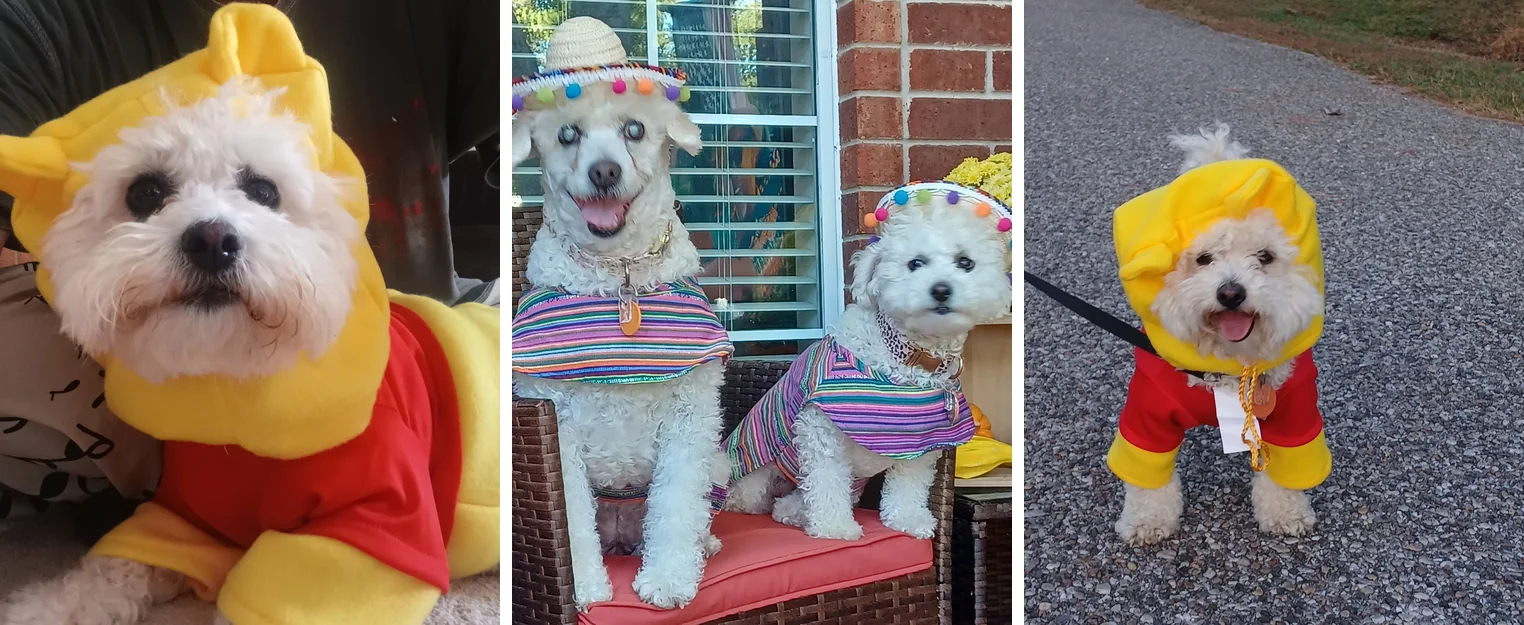
My own pups, all dressed up for Halloween.
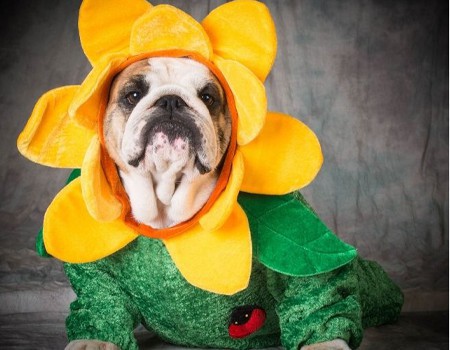
A Halloween costume is fine only for a pet who actually enjoys wearing one, and a festive bandana is the safe fallback. Here’s how I’d check before you buy anything.
Make sure your pet WANTS to wear it. Please don’t put a dog or cat in a costume unless you know they love it, and never force it.
Watch the body language. Folded ears, eyes rolling back or looking sideways, a tucked tail or hunching over can all mean your pet is uncomfortable. A pet who stays quiet may still be unhappy.
Go with a bandana or nothing. A festive bandana is a good choice for pets who are uneasy about a full outfit. Supervise it, because a bandana can catch on things.
Check the fit. It should be snug but not tight, and not so loose that it twists, trips your pet or slips off. Nothing should rub. A costume can also trap heat, so skip heavy outfits when it’s warm out.
Run the see, hear, breathe and move test. Your pet needs to see, hear, breathe, move, open their mouth, bark or meow, and go to the bathroom without the costume getting in the way.
Skip the mask, and anything dangling or chewable. Keep a mask or hat to the time it takes to snap a photo. Small parts, buttons, strings, sequins and beads can be swallowed, and metal snaps and beads can cause zinc or lead poisoning if swallowed. Never dye your pet’s fur.
Practice before Halloween. Try the costume on well before October 31, a little at a time, with treats. Keep each try-on short so the costume stays a good experience.
Never leave a costumed pet unattended.
Add reflective tape if you’ll be out after dark. Put it on the costume, and keep your pet on a leash with ID.
Know when to take it off. If your pet seems uncomfortable, keeps trying to get it off, struggles to move or has itchy skin, take the costume off. Photo first, then off.
Cats get the same rules. I’d steer most cats toward a bandana or nothing. One national veterinary hospital network advises skipping costumes for cats altogether, even cats who love to play dress up, and choosing a festive collar, harness or bandana instead.
Costume quick check
Costume on. Yes or no?
- Can they look around freely?
- Can they pick up sounds?
- Is their breathing easy?
- Can they walk and turn without a snag?
- Can their jaw open wide?
- Can they still make noise?
- Can they potty without trouble?
Any “no” means off it comes.
Candy, Wrappers and Sugar-Free Gum
Keep all candy out of reach, because chocolate, xylitol, raisins and wrappers can each make a pet seriously ill. Chocolate can be deadly for dogs and cats, and the darker it is, the worse it gets.
Xylitol is the one to watch for dogs. It turns up in sugar-free gum, candy and mints, and it can cause a sudden drop in blood sugar that can lead to a loss of coordination and seizures. Xylitol may be a danger for other pets too. Sugar-free gum is the main one to watch, so check the label on any sugar-free treat and call a poison line, or your vet, if you can’t tell what’s in it.
Raisins can cause kidney failure. Foil, cellophane and plastic wrappers can cause a blockage that can require surgery.
Store the candy in a high cabinet with a lock or a child-safety latch. Pets find candy hidden in kids’ rooms, too. Please make sure children don’t give a “treat” to your pet. If your pet gets into any of it, call your vet or a poison line right away (the number is below).
Candy hazards at a glance
Chocolate
Dogs and cats. Dark types rank highest.
Xylitol
Gum, candy, mints. Mainly dogs.
Raisins
Hits the kidneys.
Wrappers
Foil, cellophane, plastic. Gut blockage.
Candles, Cords and Glow Sticks
Swap real candles for battery-operated lights, since a pet can easily knock over a lit pumpkin and start a fire. Curious kittens are especially at risk of getting burned or singed.
Keep cords and strung lights out of paws’ reach. Fake cobwebs and rubber eyeballs can choke or tangle a pet, so put them up where your pet can’t get to them.
Glow sticks and glow jewelry are usually not dangerous, but they taste awful and can cause drooling. If your pet chews one, call the vet.
If Your Pet Eats Something, Call Right Away
If your pet eats something they shouldn’t, call your vet or a poison line right away. Keep the 24-hour number for ASPCA Poison Control handy, (888) 426-4435. The line answers every day of the year, and a consultation fee may apply.
Pet Poison Helpline, (855) 764-7661, is a second 24-hour option, and it charges a fee too. The sooner someone looks at your pet, the better, so don’t wait to see whether they seem fine.
Poison line numbers to save in your phone
ASPCA Poison Control
(888) 426-4435
Open 24 hours, daily
A consultation fee may apply
Pet Poison Helpline
(855) 764-7661
Open 24 hours
Charges a fee
Halloween Night With an Anxious Pet
Some pets find Halloween night too much, even with a good quiet room, and October is a busy month for parties and weekend trips. If you’ll be out or away, we at Top Dog Pet Sitters can keep your pet’s evening calm and on routine, right at home in McKinney, Melissa or Celina. We offer dog walking and cat care for pets who would rather stay put, and if you’d like to talk it over, please get in touch.
Have a happy and pet-safe Halloween!

Susan Gary owns Top Dog Pet Sitters in McKinney, Melissa, and Celina, TX, with her husband, Erick. She has been a professional pet care provider since 2015. Susan is a member of Pet Sitters International, is a founding member of the Texas Pet Sitters Association, and certified in pet CPR/First Aid. Susan is a long-time McKinney resident and a retired minister. Learn more about her here.