
By Susan Gary
Should You Give a Pet as a Gift? My Honest Answer
Usually not as a surprise, but pets as gifts can work in one situation. The person has asked for a pet for a long time, has the time and money to care for one, and gets to choose the animal. After more than thirty years of caring for pets, that’s what I tell pet parents.
You’ve probably heard that pets as Christmas gifts pile up at shelters in January. The research I found doesn’t show that gift pets are given up more often than other pets. The ASPCA recommends giving pets as gifts only to people who have shown a sustained interest in owning one and can care for it responsibly. A peer-reviewed survey by ASPCA researchers asked 1,006 US adults about it, and 222 of them had received a dog or cat as a gift. In that survey, getting a pet that way was not significantly linked to how attached people were or whether the pet was still in the home. The ASPCA says 96 percent of the people in the survey who got a gift pet reported that their attachment grew or stayed the same.
I should be fair about the limits. The ASPCA ran that survey, so it has a stake in the result. The older shelter studies, from the 1990s and early 2000s, also found that gifted pets were not given up more often, but they are old. One smaller online survey of about 3,900 people, mostly in the UK, found that pets received as gifts were at higher risk of being given up. Its authors say this runs against earlier research, that the studies on this question conflict, and that more research is needed. Some shelters report a busier January, though I found no national number showing a spike.
So I say go carefully, because the true part of the old warning still stands: a person has to want the pet and be ready for it.
A Pet Is a Commitment of a Decade or More
Many dogs and cats live a decade or more, and a surprise pet asks someone else to sign up for all of those years. The Cornell Feline Health Center describes caring for a cat as a commitment of ten to fifteen years or more.
Pets are not toys. Toys are played with, put away and eventually outgrown. Animals are not disposable.
Then there’s the cost. Vet visits, emergencies, food, training and supplies all add up, and in my world, so does pet sitting when the family travels. The adoption fee is only the start of the cost.
Other species have their own surprises. The Rabbit.org Foundation says rabbits can live about eight to fourteen years, are not low-maintenance, and are often bought on impulse at Easter. The ASPCA does not recommend keeping large parrots as pets unless appropriate care can be provided, and notes that their lifespans may exceed their owner’s.
The animal has to fit the household for all those years. A high-energy breed like a Malinois needs daily exercise and work, and the AKC says a Siberian Husky may not be a good fit for a family that’s out of the house a lot, and that such families should probably consider other options.
Questions to Ask Before You Wrap Anything
The ASPCA’s test is a sustained interest in owning a pet and the ability to care for one responsibly. Here are the questions I’d ask:
- Has the person asked for a pet, and more than once?
- Will the person get to choose the animal?
- Who is home during the day? A dog needs a plan for a workday, whether that’s family or someone to help with dog walking.
- Does anyone in the home have allergies, and what do the lease or landlord rules say?
- Are there other pets, and will they get along with a newcomer?
- Is the recipient a child? Under 12, the parents should be ready and eager to take on the care.
- Has the person lost a pet recently, and are they ready for a new one?
If most of your answers are “I don’t know,” wait.
What a Busy Holiday House Does to a New Pet
The holidays can be a hard landing for a new pet, because visitors and activity can make it hard to settle in. The ASPCA says the recipient’s schedule should be free enough to help the pet adjust, which it calls especially important during the holidays.
There’s another side. The AKC says time off from work or school can help a new pet adjust. That works only when the house is calm and the days are open.
The Humane Society of Central Texas says dogs need at least three to five days of quiet to settle in. A safe room away from the noise helps. For a new puppy, skip the big gatherings and let it come to people on its own.
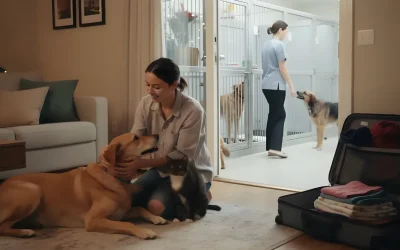
Holidays also mean trips, and we do get asked to watch a newly adopted pet while the family is gone. A gifted pet needs someone lined up for the first trip, and that gets settled before the pet arrives, not after. At Top Dog Pet Sitters, we care for pets at home when families travel, cats included when you’re away.
Then there are the holiday hazards around the house. The ASPCA says tinsel can cause serious problems if a pet eats it, including vomiting and a blocked digestive tract that may need surgery. Lilies are highly toxic to cats and can cause kidney failure. Chocolate can make pets sick, and the darker it is, the greater the risk. Poinsettias can cause mild to moderate stomach irritation.
If you think your pet ate something it shouldn’t have
Call your vet or ASPCA Poison Control at (888) 426-4435. A consultation fee may apply.
What to Give Instead of a Pet
You can still give the surprise without the commitment. The AKC has a list for that, and it’s simple.
What goes in the box instead of the puppy
The AKC suggests wrapping up:
- A bed
- A crate
- Bowls
- A leash
- Books
- A letter saying a puppy will be joining the family soon
A few more ideas that work:
- A book about the breed. The AKC suggests this instead of a puppy under the tree, and mentions puppy classes or a dog show as extras.
- A gift certificate from a shelter or rescue. Some shelters suggest this, so the person who’ll live with the pet gets to pick it.
- A plan to adopt together after the holidays. This one is my own suggestion, and it fits the AKC’s advice to wait.
If You Still Want to Give a Pet, Do It This Way
Let the person who will live with the animal pick it. The AKC says never to give a dog that the recipient didn’t help choose.
Start with a shelter or rescue. The ASPCA recommends getting pets from shelters, rescue organizations, friends, family or responsible breeders, and a shelter or rescue is where I’d look first. Humane World for Animals points out that a shelter pet usually costs less than one that’s bought or acquired free once vaccines, spay or neuter and a microchip are counted, which is one more reason to start there. Book a vet visit soon after the pet comes home.
If a new pet is joining a family that will be away at some point, send us a note through our website and ask about overnight and extended pet sitting.
A pet who is wanted and planned for is a wonderful gift.

Susan Gary owns Top Dog Pet Sitters in McKinney, Melissa, and Celina, TX, with her husband, Erick. She has been a professional pet care provider since 2015. Susan is a member of Pet Sitters International, is a founding member of the Texas Pet Sitters Association, and certified in pet CPR/First Aid. Susan is a long-time McKinney resident and a retired minister. Learn more about her here.