A good holiday plan means your pets are cared for and your house looks lived in while you’re away. Pet sitting and boarding can both get you there.
Pet sitting vs boarding comes down to your pet’s routine, temperament and age. Pets who rely on routine often settle better with a sitter at home, and social, confident dogs can enjoy a well-run boarding facility. With Thanksgiving, Christmas and other holiday travel on the calendar, here’s how I’d sort it out for dogs, cats and other pets.
What is the difference between pet sitting and boarding?
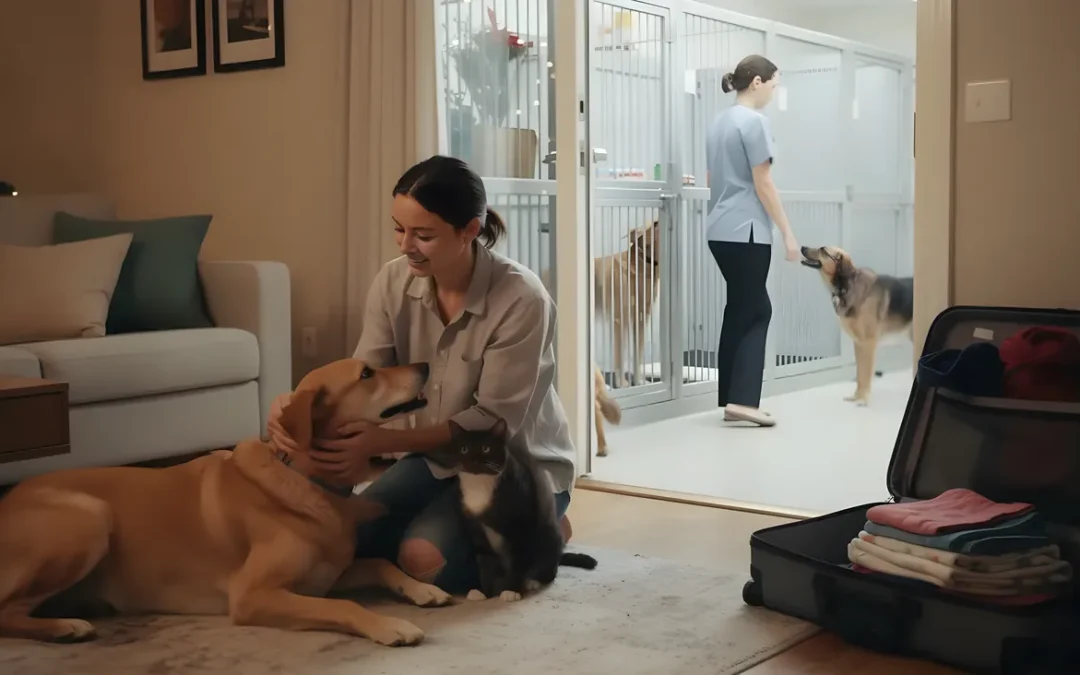
With in-home pet sitting, your pet stays home and the care comes to them. With boarding, your pet stays at a facility with other animals.
At Top Dog Pet Sitters, we come to your home in McKinney, Melissa or Celina, so your dogs, cats and other pets keep their own space and daily routine. A professional sitter is also insured and bonded. I’ll explain what that covers in the how-to-choose section near the end.
Your pet’s personality: who does well at a boarding facility
Boarding can be a good fit for social, confident dogs that handle new places without much fuss.
Texas A&M’s veterinary college says boarding “can be a safe and necessary option” when it’s chosen well. It can also suit dogs that already know the facility, and pets with medical needs a facility is set up to handle, such as having a vet on staff.
Quality varies, so tour first. The checklist below covers what to ask.
After more than 30 years caring for pets, I’ll happily say a good, well-run place can be a fine choice for the right dog. (Yes, a pet sitter just said that.)
Tour checklist for any facility
Vaccines
Which records are required?
Cleanliness
How clean does the place look?
Grouping and supervision
How are dogs grouped and watched?
Vet support
What help is available if your pet needs it?
A facility that won’t let you tour may be a warning sign.
Your pet’s routine, age and household: who does better at home
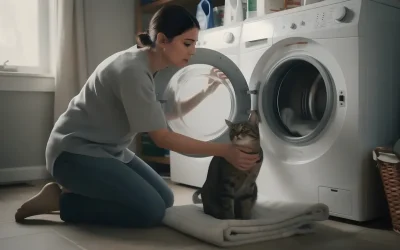
Staying home keeps a pet’s bed, bowls and daily rhythm in place, and many routine-loving pets cope better with that.
- Anxious or routine-bound pets may find a change of surroundings stressful. A sitter at home removes that change.
- Senior pets may do better where everything is familiar. If your pet is elderly or medically fragile, call your vet before you decide.
- Cats often prefer their own territory. Texas A&M’s vets said in 2016 that pet sitters are a great option for cats because they stay in their own environment. Well-run catteries exist, and some cats do fine there. If you’d rather your cat stay put, here is cat sitting while you’re out of town.
- Multi-pet homes may suit a sitter best. Housemates who get along stay together, and being separated from them can be a stressor of its own.
Which option may fit, at a glance
Boarding may suit
Social, confident dogs. Dogs that already know the facility. Pets with medical needs a facility is set up to handle.
A sitter at home may suit
Anxious or routine-bound pets. Seniors. Cats. Pets that live with housemates they get along with.
Illness and stress: what vets say about group settings
Boarding changes a pet’s surroundings and routine. A UC Davis veterinary behavior handout calls stress the most common behavior change in boarding.
Texas A&M’s vets say stress can “temporarily affect appetite, digestion, behavior, and even immune function.” Then there’s kennel cough. The Merck Veterinary Manual describes it as usually mild and clearing up on its own. It spreads quickly where dogs share space, though, and it can be harder on puppies and on older or weakened dogs.
A dog can pass it on before showing signs, and some dogs pick it up anywhere dogs gather. A cough can show up a few days after exposure, which may be after your dog is already home.
We have hundreds of stories of pets that came home from boarding with kennel cough, and of dogs that were attacked by another dog. Some of our clients came to us because that was their experience at a boarding facility.
Vaccines can lower the chance and severity of respiratory illness, but no vaccine is 100 percent effective, so ask your vet which ones your pet needs. In-home care isn’t germ-free either, since hands and objects can carry some illnesses. Fewer animals mixing may lower exposure.
Research on boarding stress in dogs is mixed. A small 2014 University of Birmingham study of dogs in kennels noted that excitement can come from positive reasons as well as negative ones. Some dogs seem to enjoy the change of scenery and others find it hard, so how your own dog handles new places matters most.
Call your vet if
- Your pet is elderly, medically fragile or very anxious, before you decide on a stay.
- A cough shows up after a stay, even a few days later.
- Signs of stress last or seem severe after a stay.
Your house and the holiday calendar
Care at home can include the house itself, which helps it look lived in while you travel.
When we care for your pets, we bring in the mail and packages, remove flyers from your front door, alternate lights, water plants, and take your trash and recycling out or bring it back in.
Our holiday schedule fills up early, so I’d plan ahead.
How to choose, whichever you pick
The same handful of questions work for a sitter or a boarding facility, and good providers answer them easily.
- Is the provider insured and bonded?
- Is the team trained in pet first aid and CPR?
- What is the plan if my pet gets sick or hurt?
- Which vaccine records are required?
- Can I see where my pet will stay? (For a facility, take the tour.)
Insurance and a bond are two different protections. Insurance helps if something goes wrong with a pet or your home, and a bond helps if something is stolen. Both have limits and conditions, so ask what each one covers.
A few questions I hear
Is it better to board your dog or leave them at home?
It depends on your dog. A dog that loves meeting other dogs and shrugs off new places may enjoy a good facility. A senior, an anxious dog or one that leans hard on routine may be happier at home. If your dog is elderly or medically fragile, check with your vet first.
Where can I leave my dog or cat when I travel for the holidays?
You have three common choices: a trusted friend or family member, a professional sitter who cares for your pet at home, or a boarding facility. Many cats do better in their own home. Whichever you pick, book early because holiday dates can fill up, and leave your vet’s contact details.
Do dogs feel abandoned when boarded?
Nobody can say what a dog feels, and research on short stays is mixed. Some dogs look happy to be there and others struggle. Watch how your dog reacts to new places and new people, since that tells you more than any study. If signs of stress linger after a stay, call your vet.
Care for your pets and your home while you travel
If home sounds like the right fit for your pet, you can see what in-home pet sitting while you travel looks like with us. We offer as many drop-in visits as your pets need, plus 12-hour daytime care, overnight care and 24-hour care. We require a Meet and Greet with every new client.
We belong to Pet Sitters International, and our team is insured, bonded and trained in pet first aid and CPR. My husband, Erick, and I attend conferences, and our employees attend workshops. We’re also proud of our over 200 five-star reviews and of being voted Best in McKinney and Melissa. Our tagline says it all: Loving Your Pet, Respecting Your Home, Exceeding Your Expectations.
After all these years, I still start with one question: how does your pet handle a change in routine?

Susan Gary owns Top Dog Pet Sitters in McKinney, Melissa, and Celina, TX, with her husband, Erick. She has been a professional pet care provider since 2015. Susan is a member of Pet Sitters International, is a founding member of the Texas Pet Sitters Association, and certified in pet CPR/First Aid. Susan is a long-time McKinney resident and a retired minister. Learn more about her here.