There’s no single temperature that’s too hot for every dog, and I’d doubt any post that hands you one. What changes the answer is a short list of things you can check yourself, and humidity makes North Texas summers harder on dogs than the thermometer suggests. Cats feel the heat too, so these summer pet safety tips cover them as well.
How Hot Is Too Hot for Dogs?
How hot is too hot depends on your dog and the air around them, and humid weather is harder on dogs than dry weather. Here’s what raises the risk:
- Flat-faced dogs (brachycephalic, if your vet uses that word) can be at higher risk. VCA Animal Hospitals says they may struggle even when temperature and humidity are only moderately high.
- Puppies, seniors, overweight dogs and dogs with health problems can be at higher risk, according to the AKC. Thick or dark coats and heart or breathing disorders belong on that list too, per Cornell’s vet college.
- Humidity matters in North Texas. In plain terms, humid air makes it much harder for a dog to cool off. Texas A&M’s vet school puts it this way: “Once the humidity in the air reaches about 85 percent, evaporative cooling is almost totally inhibited.” Dogs cool off by panting, and panting works best in dry air (AKC).
- Shade helps, but it needs moving air to do its job, says Auburn’s vet school.
- Hard play can overheat a dog even when the weather doesn’t seem that hot (VCA).
The AVMA puts it simply: if you’re warm, your dog likely is much warmer. A pet that isn’t acclimated to hot weather yet may also overheat more easily, per Texas A&M, so go slow with pups who are new to the heat.
Signs of Heat Stroke in Dogs and Cats
Heat stroke is when a pet’s body can’t cool itself down fast enough, and it can lead to organ damage and death (AKC, AVMA). Early signs of heat stroke can include:
- Heavy panting
- Drooling
- Rapid or hard breathing
- Bright red gums and tongue (AKC)
Worse signs can include weakness or drowsiness, vomiting or diarrhea, unsteadiness, pale or bluish gums and collapse (AVMA, AKC). Cornell also lists confusion and seizures, and VCA lists seizures too. AVMA and AKC treat collapse as an emergency.
Cats read a little differently. Any open-mouth breathing or panting in a cat is abnormal, according to Tufts, and a cat that’s panting, very lethargic or unable to walk should see a vet right away. Cornell’s feline health experts add weakness, collapse, drooling, vomiting and diarrhea to the list.
What to Do First (and Call Your Vet)
Heat stroke is an emergency. Call your vet or an emergency vet right away and head there. Don’t wait to finish cooling your pet before you leave. Start while you arrange the trip and keep going on the way. The vet sources share these steps, and this order is the AKC’s:
- Get your pet out of the heat, into shade or air conditioning.
- Turn on a fan.
- Run cool water over the body. Cool, not ice-cold (AKC, VCA, Tufts). The AKC explains that cold or icy water can actually reduce heat loss.
- Offer a little water to drink only if your pet is alert and able to drink (AKC).
Our pet CPR and first aid instructor tells us to use wet towels, and the AVMA agrees. Wet them with room-temperature water, place them gently around the neck, in the armpits and in the groin, and rewet and replace them every few minutes (AVMA). Don’t wrap your pet in them or cover the body, because that can trap heat (VCA, Tufts).
Your vet may tell you something different over the phone, and their word wins.
A pet that seems better afterward still needs to be seen, because internal damage can be hidden (AKC). These steps buy time on the way to the vet. Please don’t plan on treating heat stroke at home.
Mistakes to skip on the way to the vet
- Finishing the cool-down at home before you leave. Start cooling while you arrange the trip.
- Using ice-cold water. It can actually reduce heat loss (AKC).
- Wrapping or covering your pet in wet towels (VCA, Tufts). Place them at the neck, armpits and groin instead (AVMA).
- Skipping the vet because your pet perks up. Internal damage can be hidden (AKC).
Never Leave Your Pet in a Vehicle
The AVMA says the inside of a parked car can rise about 20 degrees F in 10 minutes, and almost 30 degrees in 20 minutes.
You may think a few minutes in the car is no big deal. Per the AVMA, cracked windows and shade don’t change this, and the rise is about the same whether it’s 70 or 110 outside. The figures come from research on children in vehicles.
Run the errand later, or leave your pet at home.
Inside a parked car, the temperature climbs fast
About 20 degrees F
in the first 10 minutes
Almost 30 degrees F
by 20 minutes
Cracked windows and shade do not change this. Source: AVMA.
Water, Shade and Walk Times
Pets can get dehydrated quickly in hot weather, so keep fresh, cool water out all day and walk in the cooler parts of the day. The ASPCA says the same.
Tufts names 11 a.m. to 2 p.m. as the hours to avoid long walks or hikes. Cornell says the day is hottest toward late afternoon, around 3 to 5 p.m., so early morning or evening walks are best. In the Texas heat, my team walks dogs before 10 a.m. If you have to go out at midday, keep it short and take water.
Check the pavement with your hand. If it’s too hot for you to touch, Texas A&M says it’s too hot for your pet’s paws. On the hottest days, I’d stick with indoor play or the cooler hours.
Trim long hair if you need to, but never shave a dog down to the skin. The ASPCA says the coat protects against overheating and sunburn.
Sunscreen and Sunburn
Pets with light or white coats, pale non-pigmented skin or thin hair can sunburn, and ear tips and noses are common spots. Cats with white or thin fur can burn even indoors, because glass isn’t sun proof (Pet Poison Helpline).
Use a sunscreen labeled for pets (ASPCA). Human sunscreens often contain aspirin-like compounds called salicylates, which can be harmful if a pet licks or swallows them, and cats are especially sensitive (Pet Poison Helpline). Ask your vet which product to use.
If your pet ate sunscreen, call your vet or Pet Poison Helpline at (855) 764-7661. A fee may apply.
Pool and Lake Safety
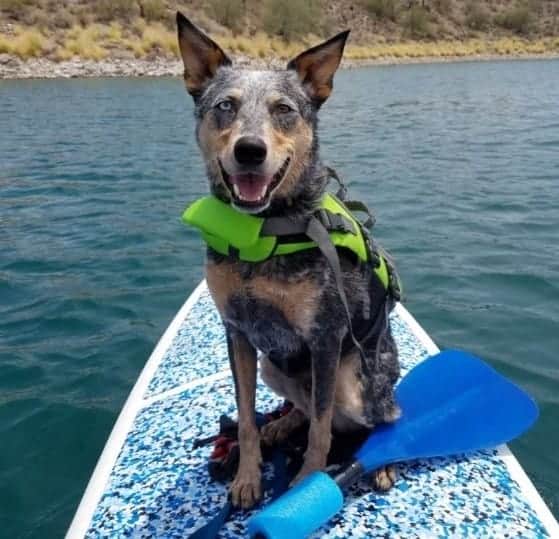
Never leave a pet unsupervised near a pool. The AKC notes that even strong swimmers can tire, so a life jacket is worth it. For one that works, the AKC suggests a bright color, a handle, reflective material, adjustable straps and a snug fit.
Don’t let pets drink pool or lake water, and rinse them after swimming to remove chlorine or salt (ASPCA).
Blue-green algae is the one I’d watch for in Texas lakes. Blooms can look like foam, scum, mats or paint on the water, and animals can get sick within hours of swallowing the toxins (CDC). You can’t tell by looking whether a bloom is toxic, and Texas has had dogs die from them, according to TCEQ. Keep your pet out, and wash them with clean water right away if they’ve been in.
See foam, scum or paint-like film on the water?
Keep your pet out. A bloom can look harmless and still carry toxins, and sickness can follow within hours (CDC, TCEQ).
If your pet already got in, wash them with clean water right away (CDC).
Cats Feel the Heat Too
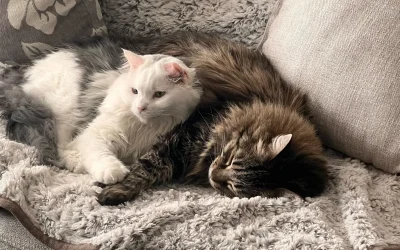
Cats need fresh water and a cool indoor spot when it’s hot, and they can get heat stroke too. Keep water out at all times, and a running fountain may encourage drinking, says Cornell’s feline health center. When extreme heat is forecast, keep your kitty indoors in air conditioning, and the center advises checking sheds and garages so no cat gets shut inside.
Keep unscreened windows closed and screens tightly secured. Open unscreened windows are a real danger, since pets often fall out (ASPCA).
Flat-faced cats such as Persians, older and overweight cats, and cats with heart or lung disease are more susceptible to heat stroke (ASPCA). The ASPCA says brushing more often in the heat may help. If a cat is overheating, move them to a cool, drafty spot, wet the fur gently with cool (not very cold) water, and call the vet immediately (Cornell).
If you’re traveling and your cat is staying home, there’s cat sitting while you’re away for exactly that.
Ticks, Fleas and Your Vet
Check your pet for ticks daily and remove any you find. Signs of tick-borne illness may not show for 7 to 21 days or longer (CDC).
Ehrlichiosis is one tick-borne disease in dogs, and VCA says it’s usually carried by the brown dog tick, which can turn up across the United States. The disease itself occurs regularly in the southeastern and southwestern states.
Heavy flea infestations can cause anemia, especially in puppies and kittens (Merck Veterinary Manual, VCA). Never put a dog tick product on a cat without asking your vet first, and ask about heartworm testing and year-round prevention too (ASPCA, AVMA).
Pet Care Help in McKinney, Melissa and Celina
Hot pavement, heat stroke and green algae are heat problems I see around here. Hot days are hard to manage alone when work or travel pulls you away from your pets. I’ve spent decades caring for pets, and at Top Dog Pet Sitters we offer dog walking to pet parents in McKinney, Melissa and Celina.
We’d love to help you look after them when the heat climbs.

Susan Gary owns Top Dog Pet Sitters in McKinney, Melissa, and Celina, TX, with her husband, Erick. She has been a professional pet care provider since 2015. Susan is a member of Pet Sitters International, is a founding member of the Texas Pet Sitters Association, and certified in pet CPR/First Aid. Susan is a long-time McKinney resident and a retired minister. Learn more about her here.